
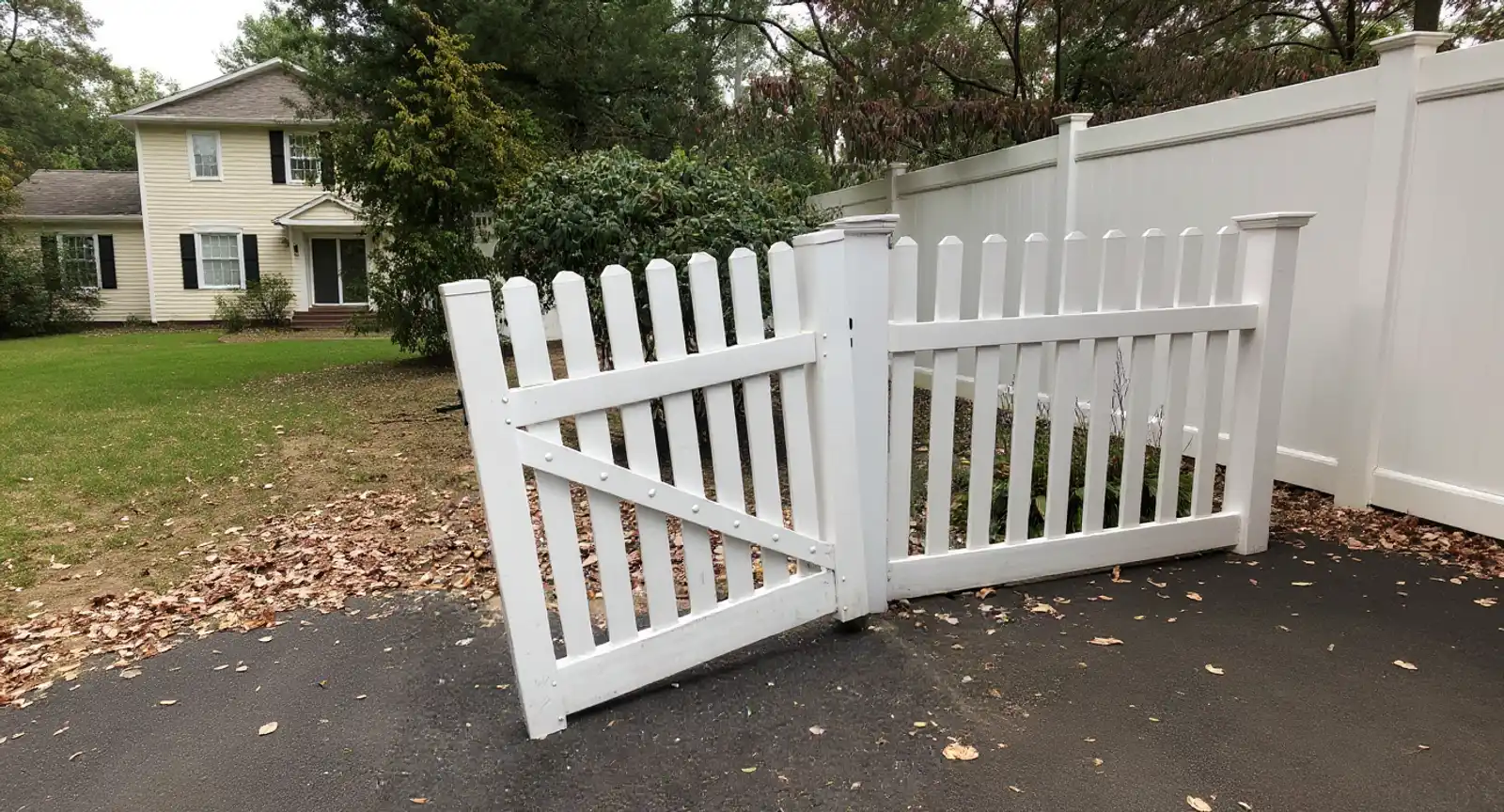
Privacy Fence Installation in Monmouth County, NJ
Stockade panel, tongue-and-groove, and solid board privacy fencing in wood and vinyl — installed with free estimates.
A privacy fence is a solid-panel fence built to block sightlines and wind. In Monmouth County, Fencing By Excellence installs stockade panel, tongue-and-groove privacy, and solid board privacy fencing at the standard 6-foot privacy height — in cedar, pressure-treated pine, or vinyl, with a neighbor-friendly finish that looks finished from both sides.
Why Monmouth County Homeowners Feel Exposed in Their Own Backyards
Lot sizes in Monmouth County keep shrinking while homes keep growing. New construction pushes houses closer together, and second-story additions give neighbors direct sightlines into your patio, pool area, and outdoor living space. What used to feel like a private backyard now feels like a shared one.
The discomfort changes how you use your property. Homeowners skip morning coffee on the deck because neighbors are ten feet away. Kids avoid the backyard trampoline because it feels too visible. Entertaining moves indoors because the patio has zero screening. The outdoor space that sold you on the house sits underused because it lacks a single critical element — a real visual barrier.
A solid board privacy fence at 6-foot privacy height restores full use of your outdoor space. Whether you choose a stockade panel in pressure-treated wood, a tongue-and-groove vinyl panel from Illusions Fence, or a board-on-board design with a neighbor-friendly finish, the result is the same: complete visual screening from property line to property line. Add a windbreak-rated design and you also block gusts that make patios uncomfortable three seasons of the year.
We install privacy fences — see our privacy fence installation pricing. Call (732) 400-5426 for a free estimate. We will measure your yard, show you wood privacy options and vinyl privacy options, and give you an all-inclusive price the same day.
What sets a dedicated privacy fence apart from privacy panels?
Privacy fencing is engineered for complete visual blockage from grade to top rail. A standard wood or vinyl fence often has gaps between boards, decorative picket spacing, or lattice elements. A dedicated privacy fence — whether stockade-style wood, tongue-and-groove vinyl, or solid-board cedar — has zero gap from ground level up.
Height is the other defining factor. Privacy fencing is typically specified at 6 feet — the maximum height in most Monmouth County municipalities without a variance. Standard picket and aluminum fences run 48–54 inches. That extra 18 inches of height changes sight lines entirely, particularly for properties with grade differences between neighbors.
Material choice matters more for privacy. With a decorative fence, aluminum and ornamental styles are interchangeable in terms of function. With privacy fencing, the material determines the maintenance burden: vinyl privacy panels are maintenance-free for 25+ years, while cedar and pressure-treated wood requires periodic staining but offers warmer aesthetics. Cedar and pressure-treated wood start at $31/LF all-inclusive; vinyl privacy panels start at $24.50/LF.
Privacy Fence Styles That Deliver the Highest Windbreak Rating and Visual Screening
Tongue-and-groove privacy panels offer the densest barrier available. Each board slots into the adjacent board via a machined channel, eliminating all gaps between pickets. Light, wind, and sound cannot pass through a tongue-and-groove panel. This design delivers the highest windbreak rating of any residential fence style — blocking 95 to 100 percent of wind velocity, which makes patios and outdoor dining areas dramatically more comfortable during spring and fall in Monmouth County.
Stockade panel fencing is the most popular privacy option for a reason. Tightly spaced pickets are nailed side by side to horizontal rails, creating a near-solid wall at a budget-friendly price. Stockade panels block over 95 percent of sightlines and roughly 80 percent of wind. They are available in both pressure-treated pine and cedar. For homeowners who want solid screening without the premium of tongue-and-groove construction, stockade panels deliver the best value per linear foot.
Solid board privacy fencing in vinyl eliminates all wood maintenance. Vinyl tongue-and-groove panels from Illusions Fence never need staining, painting, or sealing. The color runs through the full thickness of the material, so scratches do not reveal a different color underneath. Vinyl solid board privacy fencing lasts 25 to 30 years with zero maintenance beyond an occasional rinse. Browse vinyl privacy designs in our catalog to compare color and texture options.
Dog-ear picket privacy fences add a traditional profile. The dog-ear cut rounds the top corners of each picket at a 45-degree angle, creating a softer fence line than flat-top designs. Dog-ear pickets work in both tight-spaced privacy configurations and wider-spaced semi-privacy layouts. They are the standard choice for homeowners who want screening with a classic, informal appearance.
Flat-top privacy panels produce a modern, minimalist look. Every picket is cut to the same height with a square top, creating a uniform horizontal line along the top of the fence. Flat-top privacy works especially well with horizontal-board layouts, where boards run side to side rather than vertically. For contemporary and mid-century homes in Monmouth County, flat-top privacy panels in cedar or vinyl create the cleanest aesthetic.
A neighbor-friendly finish eliminates the "bad side" problem. Traditional privacy fences show finished boards on one side and exposed rails and posts on the other. Board-on-board and shadow-box designs attach pickets to both sides of the rail, so every viewer sees a finished surface. This is required by some Monmouth County HOAs and avoids disputes with neighbors over which direction the fence faces. The slight gap between offset boards still blocks direct sightlines while allowing airflow.
Height matters for true privacy — 6-foot privacy height is the standard. At six feet, the fence blocks sightlines from anyone standing on level ground within ten feet of the fence line. Monmouth County zoning generally permits six-foot fences in rear and side yards. Front-yard fences are typically limited to four feet. We verify local zoning requirements during your free estimate so the fence is compliant before a single post is set.
The Privacy Fence Installation Process from First Call to Final Walkthrough
Three straightforward steps take you from open yard to complete privacy. We handle utility mark-outs and material sourcing while you choose the style and material that fits your property — and we'll advise on any permit requirements.
Free Property Measurement
We measure your yard and identify the fence line. You compare stockade panel, tongue-and-groove, flat-top, and dog-ear picket options in wood and vinyl. We provide an all-inclusive price the same day.
Prep & Scheduling
We order materials from Eastern Wood or Illusions Fence depending on your selection. Utility mark-outs are called in while materials are in transit. We advise on permit requirements — the application is the homeowner's responsibility — and confirm your installation date in advance.
Installation & Approval
We dig post holes, set posts in concrete, and install privacy panels. Gates, latches, and hardware are mounted. We clean the site and walk the fence line with you. Payment is collected only after you approve the finished fence.
What Homeowners Actually Gain After a Solid Board Privacy Fence Goes Up
A privacy fence changes how you live on your property every single day. These are the measurable outcomes homeowners report after installation.
Full Visual Screening
A 6-foot privacy height with tongue-and-groove or stockade construction blocks 95 to 100 percent of sightlines from neighboring properties at ground level.
Wind Reduction
Solid board privacy panels reduce wind velocity by up to 100 percent directly behind the fence and 50 percent at a distance of ten times the fence height. Patios become usable in all three outdoor seasons.
Noise Dampening
Dense privacy panels absorb and deflect sound. Homeowners near busy roads or loud neighbors report a noticeable reduction in ambient noise after installation.
Increased Outdoor Use
Families cook, eat, play, and relax outdoors more frequently after privacy fencing goes up. The backyard becomes an extension of the living space rather than a visible fishbowl.
Property Value Boost
A well-built privacy fence is a top-tier curb-appeal improvement that buyers actively look for. It signals a complete, move-in-ready outdoor space.
Pet & Child Containment
Solid privacy panels with no gaps prevent dogs from seeing and reacting to passersby. The 6-foot height deters climbing. Children play safely within a fully enclosed yard.
How much does a privacy fence cost in Monmouth County?
Privacy fence installation starts at $31 per linear foot all-inclusive for standard 6-foot board-on-board cedar or dog-ear picket construction. Tongue-and-groove vinyl privacy panels run at a similar starting price to wood but eliminate maintenance cost over time. Solid-board privacy fencing costs slightly more than stockade-style because of the additional lumber. Terrain matters: steep slopes or stepped lots require racking or stepped panel installation, which adds labor. Gates — especially double drive gates — are quoted separately and itemized in your estimate.
What's always included: Every privacy fence project includes labor, materials, post-setting, and cleanup — no hidden fees, no surprises at the end. Our our all-inclusive privacy fence pricing starts at $31 per linear foot. Jobs over $5,000 qualify for our 10% discount automatically.
Free estimate: We'll measure your property, walk through material options, and give you an exact price before any work begins.
Privacy Fence Lifespan and Which Material Requires Less Upkeep
Wood privacy fence in Monmouth County typically lasts 15–20 years before structural replacement is needed. The six-foot height creates more wind-load than shorter fences — post depth and post size (4x4 minimum, 6x6 for exposed locations) are critical for longevity. Board-on-board construction, where boards overlap rather than butt together, handles wind better than stockade-style because it allows some airflow.
Vinyl privacy fence lasts 25–30 years with virtually zero maintenance. Tongue-and-groove vinyl panels are engineered for structural integrity under wind load — wind-rated panels include heavier post gauges and deeper post-setting specifications. The color is integral to the PVC resin, not a surface coat, so it doesn't fade, peel, or require repainting.
The 20-year total cost comparison favors vinyl. Wood privacy fence requires staining every 2–3 years, board replacement as boards split or warp, and eventual full replacement at 15–20 years. Vinyl has no staining, no board replacement, and lasts a decade longer. Wood starts at $31/LF all-inclusive; vinyl starts at our $24.50/LF vinyl special — below the $31/LF baseline, and the saved maintenance only widens the gap over time.
How tall can a privacy fence be, and do you need a permit?
Six feet is the maximum height for residential privacy fencing in most Monmouth County municipalities without a variance. This applies to rear and side yards. Front yard fence height is typically limited to 4 feet — a 6-foot privacy fence in the front yard requires a variance from the zoning board in most towns.
Permits are required before installation. Monmouth County municipalities that require fence permits (most do) apply that requirement to privacy fencing regardless of material. Permits are the homeowner's responsibility — we'll advise on the application process and what documentation (plot plan, property survey) is typically required.
HOA approval for privacy fence height. Many HOAs have maximum height rules that match municipal limits (6 feet) or are more restrictive (5 feet in some communities). HOA approval must be obtained before permit application. We can confirm HOA requirements during the estimate visit and advise on whether your planned height is within community guidelines.
Ready to Reclaim Your Backyard with a Privacy Fence?
Request a free estimate and we will bring wood and vinyl privacy samples to your property. Choose between stockade, tongue-and-groove, flat-top, or dog-ear styles. No obligation. Jobs over $5,000 receive 10% off.
Frequently Asked Questions About Privacy Fences
- A 6-foot privacy height blocks sightlines from ground level to approximately 5 feet 10 inches at a distance of 10 feet. For most Monmouth County properties, 6 feet is sufficient to screen patios, decks, and backyard living areas from neighboring homes. If your neighbor's property sits higher than yours due to grading, we may recommend a taller panel or adding a lattice top to gain additional height without violating local zoning height limits.
- A stockade panel fence uses tightly spaced pickets nailed to horizontal rails, leaving tiny gaps between boards that allow minimal airflow. A tongue-and-groove privacy fence interlocks each board into the next, eliminating all gaps and creating a solid visual and wind barrier. Tongue-and-groove costs slightly more but delivers complete privacy and a higher windbreak rating. Stockade panels are more budget-friendly and still block over 95 percent of sightlines.
- A neighbor-friendly finish means the fence looks the same on both sides. Standard privacy fences have a finished side (flat boards) and a structural side (exposed rails and posts). A neighbor-friendly fence uses a board-on-board or shadow-box design so both you and your neighbor see an attractive, finished surface. This avoids disputes over which side faces out and is required by some Monmouth County HOAs.
- Yes. A solid board privacy fence blocks 90 to 100 percent of wind depending on the construction method (tongue-and-groove blocks the most). A dog-ear picket fence with standard spacing blocks approximately 50 to 60 percent of wind. If wind reduction for a patio or outdoor dining area is a priority, choose a solid board or tongue-and-groove design over a spaced picket option.
- Privacy fence installation starts at all-inclusive pricing starting at $31 per linear foot — labor, materials, concrete footings, hardware, and cleanup. Final pricing depends on the material (wood or vinyl), panel style (stockade, tongue-and-groove, board-on-board), height, and terrain. Gates are priced separately. Call (732) 400-5426 or request a free estimate for exact pricing.
- A flat-top privacy fence creates clean horizontal lines that complement modern and contemporary architecture. The uniform top edge pairs well with geometric landscaping and minimalist design. Dog-ear picket fences have a more traditional, softened profile. For modern homes in Monmouth County, we recommend flat-top privacy panels in either vinyl or horizontal-board wood for the cleanest aesthetic.
Get a Free Privacy Fence Estimate Today
Call (732) 400-5426 or fill out the form below. We will measure your property, show you wood privacy fence options and vinyl privacy fence options, and deliver an all-inclusive price with no obligation.